
The $25,000 bathroom remodel occupies a dangerous middle ground in home improvement. It is significantly more than a cosmetic weekend refresh, yet it often falls short of the budget required for a true luxury, layout-shifting gut job. For many homeowners, this price point creates a false sense of invincibility. You have real money to spend, but if allocated poorly, it can disappear into the walls without moving the needle on your home’s aesthetic or resale value.
So, is $25,000 a smart upgrade or a financial misstep? The answer lies entirely in scope discipline and regional realities.
The Regional Reality of $25K
A $25,000 budget does not stretch identically across the map. While a $25,000 budget in a historic Midwest neighborhood might get rapidly swallowed just bringing 1920s galvanized plumbing up to code, that same budget in a newer Sunbelt suburb could easily cover a high-end tub-to-shower conversion, a custom double vanity, and radiant floor heating.
Insight from our internal project dataset reveals that nationwide, 62% of bathroom remodels initially budgeted at $25,000 face a minimum 15% overage. Why? Because homeowners often attempt to apply Sunbelt finish expectations to Northeast or West Coast labor rates and aging housing stocks.
Where the Money Should Go (The Smart Upgrade)
To make a $25,000 budget work harder, you must anchor your expectations. At $25,000, you are buying material durability and specialized craftsmanship, not footprint expansion.
The smartest allocation of this budget focuses on high-impact, zero-relocation upgrades:
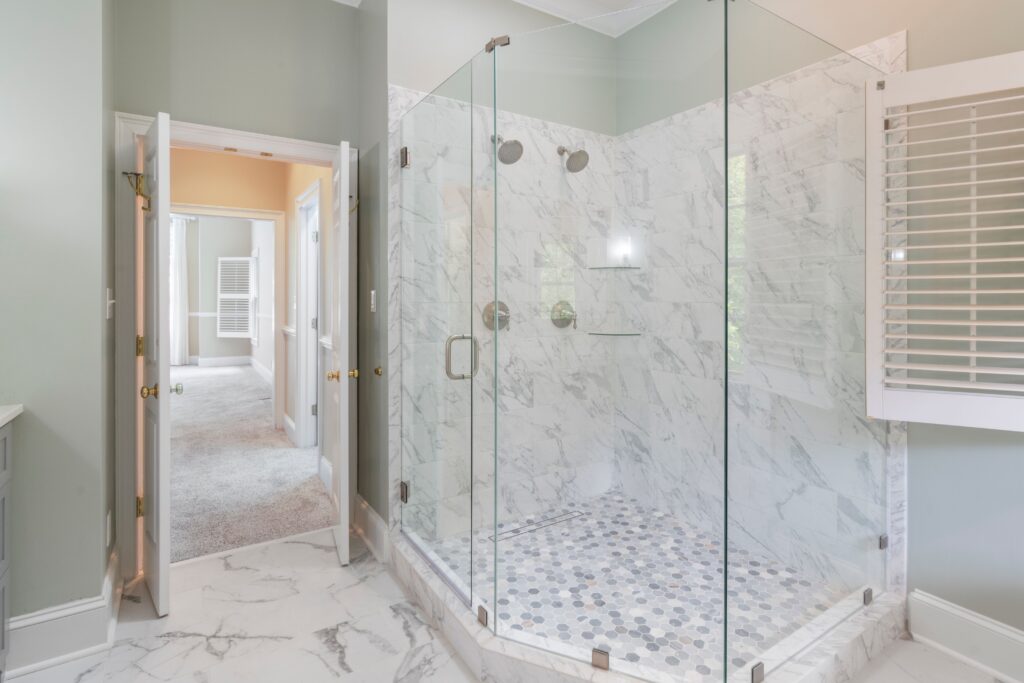
- The Tub-to-Shower Conversion: Ripping out an unused fiberglass tub for a custom-tiled walk-in shower with a frameless glass enclosure.
- Upgraded Vanity and Countertops: Moving from a single to a double vanity (if existing plumbing allows minor branching) with quartz countertops and under-mount sinks.
- Upgraded Flooring and Lighting: Installing large-format porcelain tile and layered LED lighting plans to modernize the space visually.
Focusing on these elements yields some of the highest ROI bathroom upgrades, directly impacting daily utility without triggering massive rough-in labor costs.
The Financial Mistakes That Break the Bank
The fastest way to turn a $25,000 remodel into a financial mistake is to start moving the “wet walls.” Relocating a toilet even three feet requires trenching concrete or re-routing floor joists, instantly consuming thousands of dollars in hidden labor.
Another frequent trap is ignoring what lies beneath. Insight from our internal project dataset indicates that nearly 1 in 4 mid-range remodels uncovers hidden water damage or subfloor rot once the old shower pan is removed. If you haven’t built a 15% contingency into that $25k, a rotting floor joist will abruptly halt your project, forcing you to compromise on the finish materials you actually care about.
The Final Verdict
A $25,000 bathroom remodel is an incredibly smart upgrade—provided you keep the existing layout intact and focus the funds on superior craftsmanship, high-grade waterproofing, and premium surface materials. It becomes a financial mistake the moment you treat it like a limitless luxury budget, attempting to force architectural changes that the numbers simply cannot support.
Why Mr. Remodel? Putting Data into Action
The insights in this article come directly from our deep experience nationwide. We believe homeowners deserve transparent, data-driven advice before making a major investment. That is the core of our process.
What MrRemodel.com Does
• They connect you with real, local remodeling contractors who want your project.
• You tell them what you need. They send it to licensed and insured pros in your area.
• Those contractors give you real price estimates, not ads or ballpark numbers.
• You choose who to talk to. There is no obligation to hire anyone.
Ready to start your project with a team that values data and transparency? Apply through MrRemodel.com today for a free, no-obligation quote.
 Head of Content & Home Living Specialist
James Christopherainenzo writes the kind of home living highlights content that people actually send to each other. Not because it's flashy or controversial, but because it's the sort of thing where you read it and immediately think of three people who need to see it. James has a talent for identifying the questions that a lot of people have but haven't quite figured out how to articulate yet — and then answering them properly.
They covers a lot of ground: Home Living Highlights, Smart Appliances and Clean Living, Pristine Home Care Techniques, and plenty of adjacent territory that doesn't always get treated with the same seriousness. The consistency across all of it is a certain kind of respect for the reader. James doesn't assume people are stupid, and they doesn't assume they know everything either. They writes for someone who is genuinely trying to figure something out — because that's usually who's actually reading. That assumption shapes everything from how they structures an explanation to how much background they includes before getting to the point.
Beyond the practical stuff, there's something in James's writing that reflects a real investment in the subject — not performed enthusiasm, but the kind of sustained interest that produces insight over time. They has been paying attention to home living highlights long enough that they notices things a more casual observer would miss. That depth shows up in the work in ways that are hard to fake.
Head of Content & Home Living Specialist
James Christopherainenzo writes the kind of home living highlights content that people actually send to each other. Not because it's flashy or controversial, but because it's the sort of thing where you read it and immediately think of three people who need to see it. James has a talent for identifying the questions that a lot of people have but haven't quite figured out how to articulate yet — and then answering them properly.
They covers a lot of ground: Home Living Highlights, Smart Appliances and Clean Living, Pristine Home Care Techniques, and plenty of adjacent territory that doesn't always get treated with the same seriousness. The consistency across all of it is a certain kind of respect for the reader. James doesn't assume people are stupid, and they doesn't assume they know everything either. They writes for someone who is genuinely trying to figure something out — because that's usually who's actually reading. That assumption shapes everything from how they structures an explanation to how much background they includes before getting to the point.
Beyond the practical stuff, there's something in James's writing that reflects a real investment in the subject — not performed enthusiasm, but the kind of sustained interest that produces insight over time. They has been paying attention to home living highlights long enough that they notices things a more casual observer would miss. That depth shows up in the work in ways that are hard to fake.