
You’re here because you don’t just want a well-decorated space — you want to understand what makes a house feel like home. Beyond stylish interiors and smart layouts, there’s a deeper blend of comfort, functionality, and personal touches that transforms four walls into a place of belonging. This article explores the essential elements that create warmth, from thoughtful interior inspirations and efficient home systems to the small daily habits that keep a space pristine and inviting.
We draw on expert-backed home living insights, practical maintenance knowledge, and proven strategies for optimizing everyday comfort. By combining design principles with smart appliance guidance and effective home care techniques, this guide delivers clear, actionable advice you can trust.
Whether you’re refreshing a single room or rethinking your entire living environment, you’ll find practical ideas that help you create a space that feels welcoming, functional, and uniquely yours.
Your Living Space: From House to Haven
Your home should exhale warmth, not indifference. If it feels cold or slightly off, I’d argue it’s missing layers, not square footage. Start with color—earthy neutrals or muted greens instantly soften hard edges. Add texture through rugs, throws, and woven baskets (yes, texture is the secret sauce). Lighting matters more than people admit. Swap harsh bulbs for warm lamps.
- Layer light with floor and table fixtures.
- Display personal photos or travel finds.
That’s what makes a house feel like home. I believe coziness is intentional, not accidental. Tweak, edit, repeat. Your haven evolves.
The Foundation of Warmth: Mastering Your Color Palette
Stark white can feel clean, but it often reads cold (think hospital corridor). Instead, start with warm neutrals—beige, taupe, or cream—or earthy shades like terracotta, olive green, and deep navy. These hues form the emotional base of what makes a house feel like home.
Follow the 60-30-10 rule: 60% dominant color on walls, 30% secondary tone in furniture, 10% accent through decor. For example, cream walls, a taupe sofa, and rust cushions create balance without guesswork.
For strategic color placement, paint one accent wall, hang a bold artwork, or layer textiles like rugs and throws. Small changes can shift the entire mood without overwhelming the room.
Color psychology matters. Warm tones are linked to comfort and security, making spaces feel intimate (like your favorite coffee shop). Pro tip: test paint swatches in morning and evening light before committing. Trust your personal instincts.
The Magic of Layered Lighting
Ditch the single overhead light. One central fixture creates harsh shadows and a clinical feel, flattening the room’s personality. Instead, aim for pools of warm light that invite you in (think cozy coffee shop, not dentist’s office).
To fix it, use three layers of light. Ambient lighting provides overall illumination; task lighting supports activities like reading or chopping vegetables; accent lighting highlights art, plants, or textured walls. That’s what makes a house feel like home.
For ambient light, choose floor lamps or table lamps with warm shades. For task lighting, add a dedicated reading lamp beside your favorite chair. For accent, try picture lights or discreet uplights tucked behind plants for drama. Pro tip: install dimmer switches on main fixtures so you control brightness throughout the day.
Equally important is color temperature. Bulbs labeled 2700K emit a warm, golden glow similar to sunset (the same flattering light cinematographers love). Avoid cool blue tones that feel stark. During the day, maximize natural light with sheer curtains. At night, layer in candles or a fireplace for a gentle flicker that feels alive.
Layer thoughtfully, and every room will feel balanced and beautifully welcoming for years ahead.
Embrace Texture and Tactile Comfort

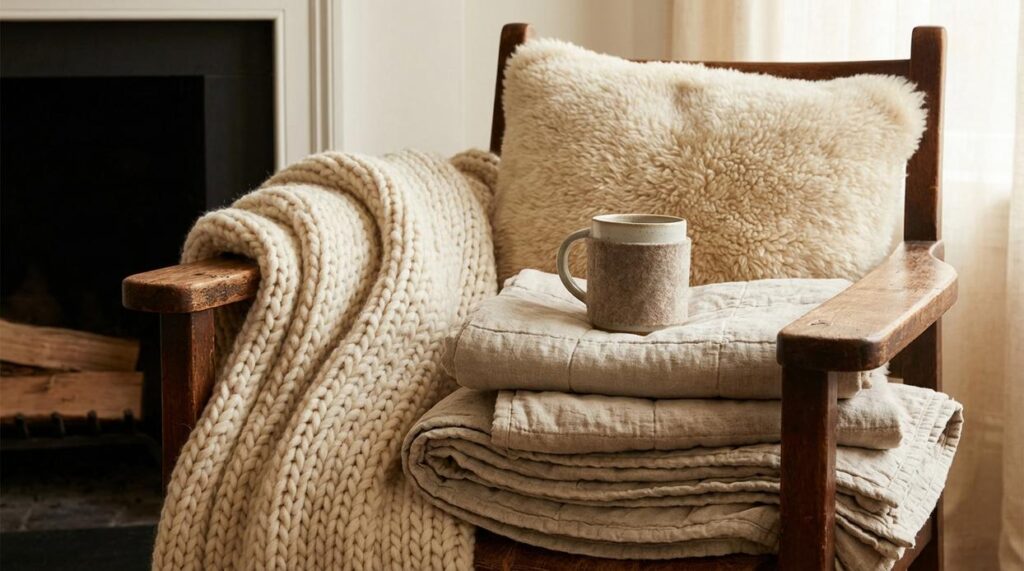
A room can look beautiful and still feel flat. The difference often comes down to texture. Smooth leather sofa vs. sofa layered with a chunky knit throw? The second one wins every time (it practically whispers, “stay awhile”). Texture engages touch and sight, adding depth that paint color alone can’t achieve.
Textile Layering: Flat vs. Inviting
Minimal cushions in one fabric can feel staged. Instead, layer intentionally:
- Drape a chunky knit throw over the sofa.
- Mix cushions in velvet, linen, and bouclé for contrast.
- Place a plush area rug over hardwood—or even over low-pile carpet—for softness underfoot.
A room without layers feels like a showroom. A layered room feels lived-in.
Natural Materials: Polished vs. Grounded
High-gloss finishes reflect light beautifully, but balance them with organic elements. Wood furniture adds warmth. Wicker baskets soften storage. Stone coasters introduce cool contrast. Leather develops character over time (like your favorite jacket). These materials connect us to nature, which studies show can reduce stress and improve well-being (American Psychological Association).
Don’t Forget the Greenery
Plants are living texture. Compare a shelf with decor only vs. one with trailing pothos—suddenly, it breathes. They add color, movement, and vitality.
If you’ve ever wondered what makes a house feel like home, texture is a powerful answer—especially when paired with clarity and calm, as explored in why do we love clean spaces the psychology behind it.
An inviting home should feel like a well-worn novel, not a staged magazine spread. Personality over perfection is what makes a house feel like home. Think of your rooms as chapters in your autobiography; every scuff mark and souvenir is a plot twist. (Showrooms are nice, but no one actually lives in them.)
Display meaningful objects the way a museum curator frames artifacts—family photos, travel finds, inherited pieces, or quirky collections that spark conversation. They are emotional anchors in the room.
A bookshelf works like a fireplace for the mind. Mix books with small decorative objects to layer texture and warmth; it signals curiosity without saying a word.
Finally, arrange furniture like a dinner party. Angle chairs inward, add a side table, and let seating invite connection instead of worshiping the TV altar. Pro tip: leave breathing room so conversations can unfold naturally and comfortably like good wine slowly.
Engage the Overlooked Senses: Scent and Sound
First, focus on scent. I recommend using an essential oil diffuser with sandalwood or cedar for a grounded feel, or vanilla for warmth (think cozy café vibes). High-quality candles or a simple simmering pot of citrus and cloves work beautifully in real homes—not just magazines. Scent is closely tied to memory, according to Harvard Health, which explains why it shapes mood so powerfully.
Next, layer in sound. Try a curated instrumental playlist, a soft air purifier hum, or even a digital fireplace app (yes, it’s surprisingly soothing—very “Nancy Meyers” energy). Finally, add rugs and textiles to absorb harsh noise. That’s what makes a house feel like home.
Crafting Your Personal Sanctuary, One Step at a Time
Transforming a room into a sanctuary isn’t about one luxury sofa or designer lamp; rather, it’s the thoughtful layering of elements that creates lasting comfort. In other words, what makes a house feel like home comes down to intentional details working together.
- Color: Soft, calming paint tones reduce visual stress and set the emotional backdrop.
- Lighting: Warm LED floor lamps (2700K bulbs are ideal) create gentle, flattering light.
- Texture: Plush throws, woven rugs, and linen cushions add tactile warmth.
- Personal Touches: Framed photos or travel keepsakes anchor meaning.
Start small—add one cozy layer today and notice the shift immediately.
To truly understand what makes a house feel like home, it’s essential to consider the profound impact that thoughtful interior design can have on our daily lives, as explored in our article “How Can Interior Design Affect Human Behavior at Kdadesignology – for more details, check out our How Can Interior Design Affect Human Behavior Kdadesignology.
Make Your Space Feel Truly Yours
You came here searching for clarity on what makes a house feel like home, and now you can see it’s not just about décor or square footage. It’s about comfort that welcomes you at the door, appliances that work effortlessly in the background, and living spaces that reflect your routines, your style, and your story.
A home that feels right reduces stress, supports your daily habits, and gives you pride in your surroundings. When your washing systems run smoothly, your spaces stay fresh, and every room feels intentional, you’re not just maintaining a property — you’re protecting your peace of mind.
Don’t let poor maintenance or outdated systems disrupt the comfort you deserve. Take the next step toward a cleaner, smarter, more inspired living space today. Explore expert-backed home care tips and trusted guidance designed to simplify upkeep and elevate everyday living. Start now and turn your house into the sanctuary it was meant to be.
 Washing Systems & Maintenance Specialist
Thomas Dodsonigthers has opinions about interior inspirations and layout essentials. Informed ones, backed by real experience — but opinions nonetheless, and they doesn't try to disguise them as neutral observation. They thinks a lot of what gets written about Interior Inspirations and Layout Essentials, Washing System Maintenance Tips, Smart Appliances and Clean Living is either too cautious to be useful or too confident to be credible, and they's work tends to sit deliberately in the space between those two failure modes.
Reading Thomas's pieces, you get the sense of someone who has thought about this stuff seriously and arrived at actual conclusions — not just collected a range of perspectives and declined to pick one. That can be uncomfortable when they lands on something you disagree with. It's also why the writing is worth engaging with. Thomas isn't interested in telling people what they want to hear. They is interested in telling them what they actually thinks, with enough reasoning behind it that you can push back if you want to. That kind of intellectual honesty is rarer than it should be.
What Thomas is best at is the moment when a familiar topic reveals something unexpected — when the conventional wisdom turns out to be slightly off, or when a small shift in framing changes everything. They finds those moments consistently, which is why they's work tends to generate real discussion rather than just passive agreement.
Washing Systems & Maintenance Specialist
Thomas Dodsonigthers has opinions about interior inspirations and layout essentials. Informed ones, backed by real experience — but opinions nonetheless, and they doesn't try to disguise them as neutral observation. They thinks a lot of what gets written about Interior Inspirations and Layout Essentials, Washing System Maintenance Tips, Smart Appliances and Clean Living is either too cautious to be useful or too confident to be credible, and they's work tends to sit deliberately in the space between those two failure modes.
Reading Thomas's pieces, you get the sense of someone who has thought about this stuff seriously and arrived at actual conclusions — not just collected a range of perspectives and declined to pick one. That can be uncomfortable when they lands on something you disagree with. It's also why the writing is worth engaging with. Thomas isn't interested in telling people what they want to hear. They is interested in telling them what they actually thinks, with enough reasoning behind it that you can push back if you want to. That kind of intellectual honesty is rarer than it should be.
What Thomas is best at is the moment when a familiar topic reveals something unexpected — when the conventional wisdom turns out to be slightly off, or when a small shift in framing changes everything. They finds those moments consistently, which is why they's work tends to generate real discussion rather than just passive agreement.